What is Japandi? A Minimalist’s Dream Aesthetic
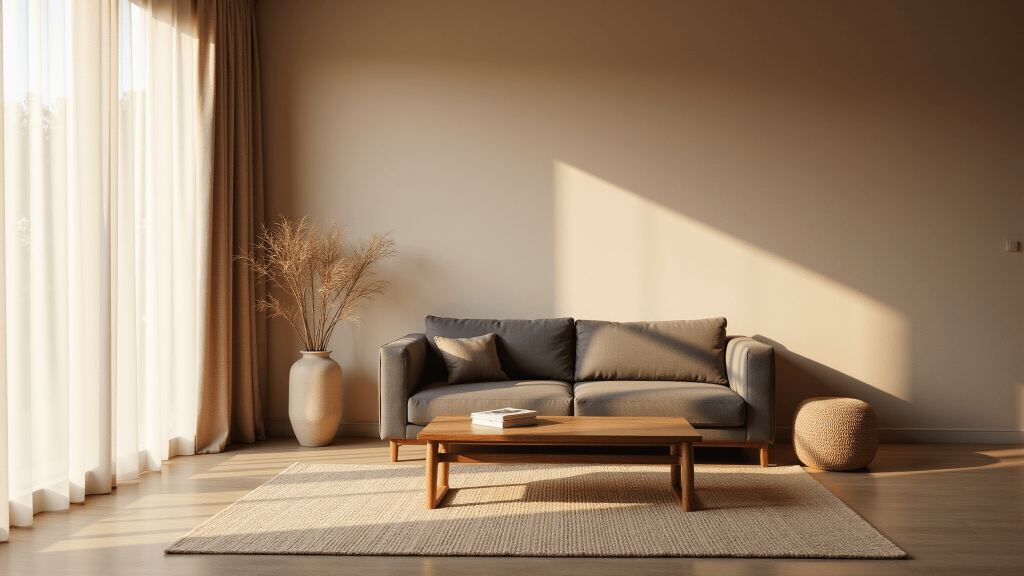
Japandi isn’t just a design style – it’s a lifestyle philosophy that blends the best of Scandinavian functionality with Japanese wabi-sabi principles. Imagine walking into a space that feels simultaneously calm, purposeful, and breathtakingly beautiful.
Key Characteristics of Japandi Design
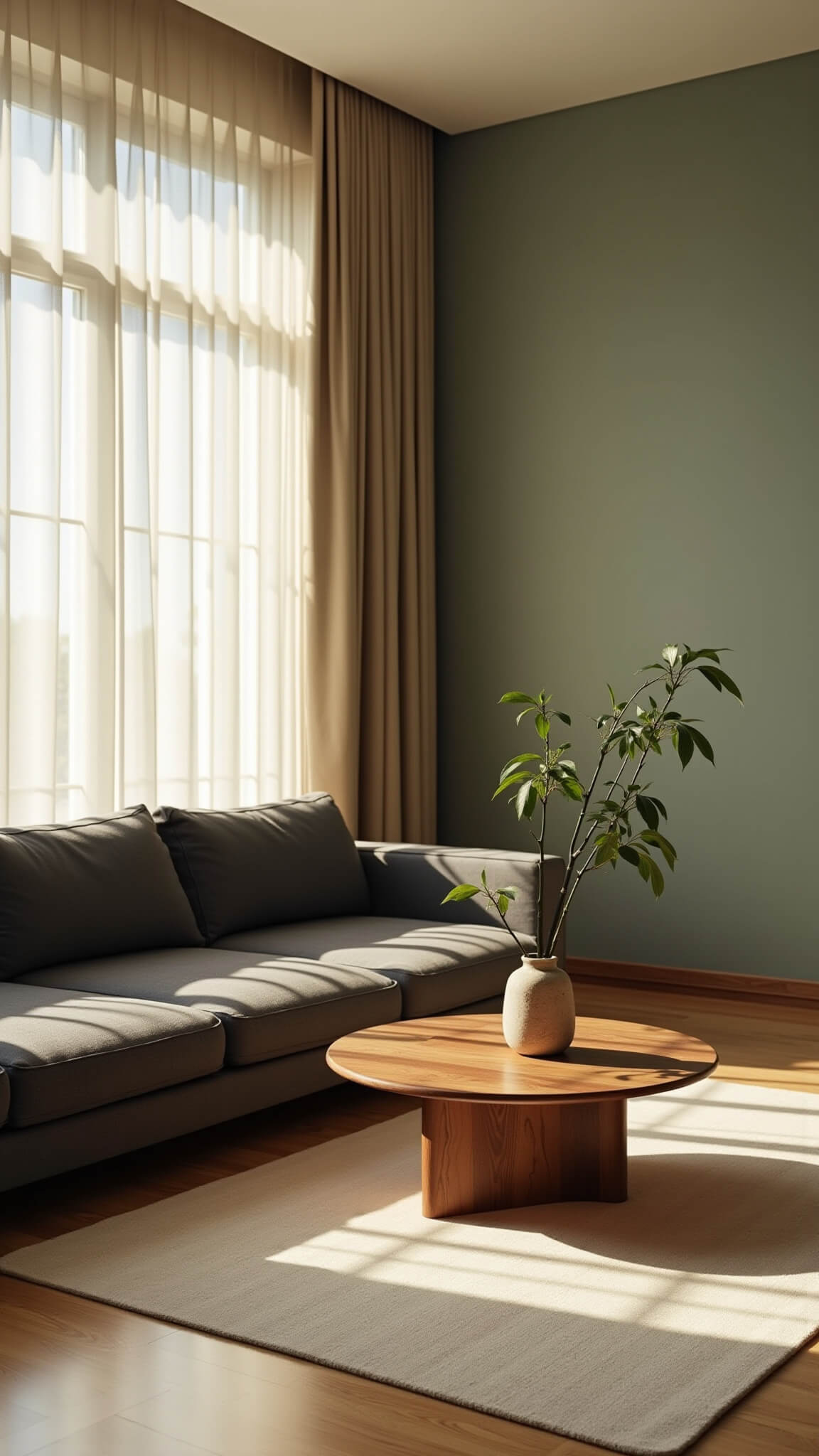
Core Elements:
- Extreme minimalism
- Neutral color palette
- Functional furniture
- Handcrafted accessories
- Emphasis on natural materials
🌟 Steal This Look
- Paint Color: Sherwin-Williams Alabaster SW 7008
- Furniture: Low-profile platform bed with clean joinery, solid oak dining table with tapered legs, modular linen sofa with removable covers
- Lighting: Paper washi pendant lights, sculptural ceramic table lamps with warm dimmable bulbs, linear LED wall sconces
- Materials: Raw oak and ash woods, unbleached linen, handmade ceramic, handwoven rush and bamboo, matte black iron accents
There’s something almost meditative about living with less—I’ve found that Japandi’s restraint actually creates more mental breathing room, turning your home into a quiet refuge from overstimulation.
Color Palette: Soft Neutrals That Speak Volumes
Forget bold, screaming colors. Japandi is all about sophisticated neutrals that whisper elegance:
- Warm whites
- Soft beiges
- Muted greens
- Earthy ochres
- Dark wood accents
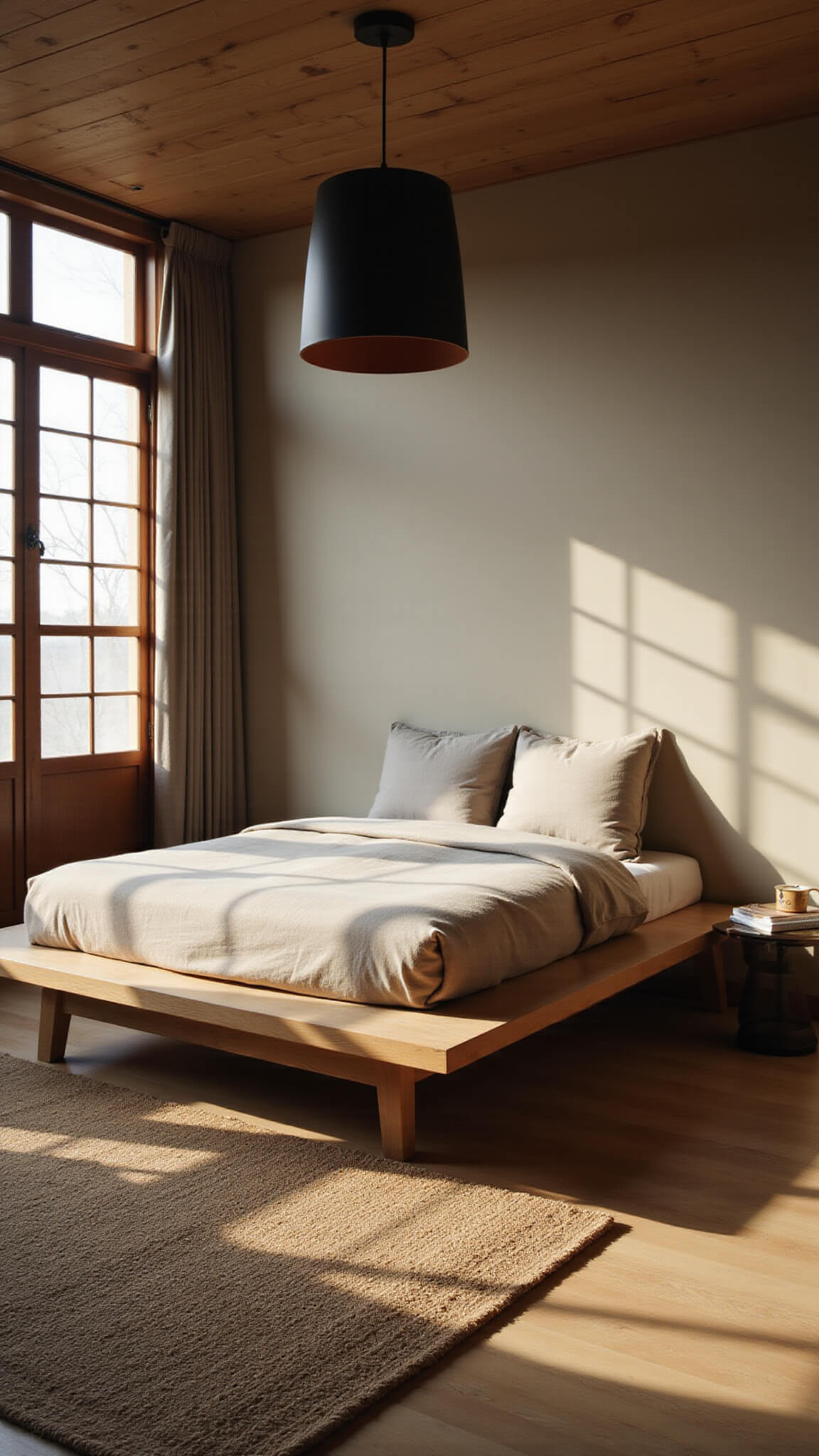
Pro Tip: Color Balance Matters
The magic happens when you hit that sweet spot of 70% neutral tones and 30% subtle accent colors. It’s like creating visual music – each tone plays perfectly with the others.
🌟 Steal This Look
- Paint Color: Benjamin Moore Swiss Coffee OC-45
- Furniture: low-profile oak platform bed with clean joinery, linen-upholstered armchair with tapered walnut legs, minimalist floating nightstands
- Lighting: paper washi pendant with warm LED bulb, slim brass floor lamp with linen shade
- Materials: raw oak grain, hand-loomed linen, unglazed ceramic, woven jute, matte black steel accents
There’s something almost meditative about walking into a room where every color feels like it belongs to the same quiet conversation—no single shade demands attention, yet together they create undeniable presence.
Furniture Selection: Less is Absolutely More
When choosing Japandi furniture, remember these golden rules:
Must-Have Pieces:
- Low-profile sofas
- Organic linen textures
- Hand-turned wood stools
- Asymmetrical shelving
- Shoji-inspired room dividers
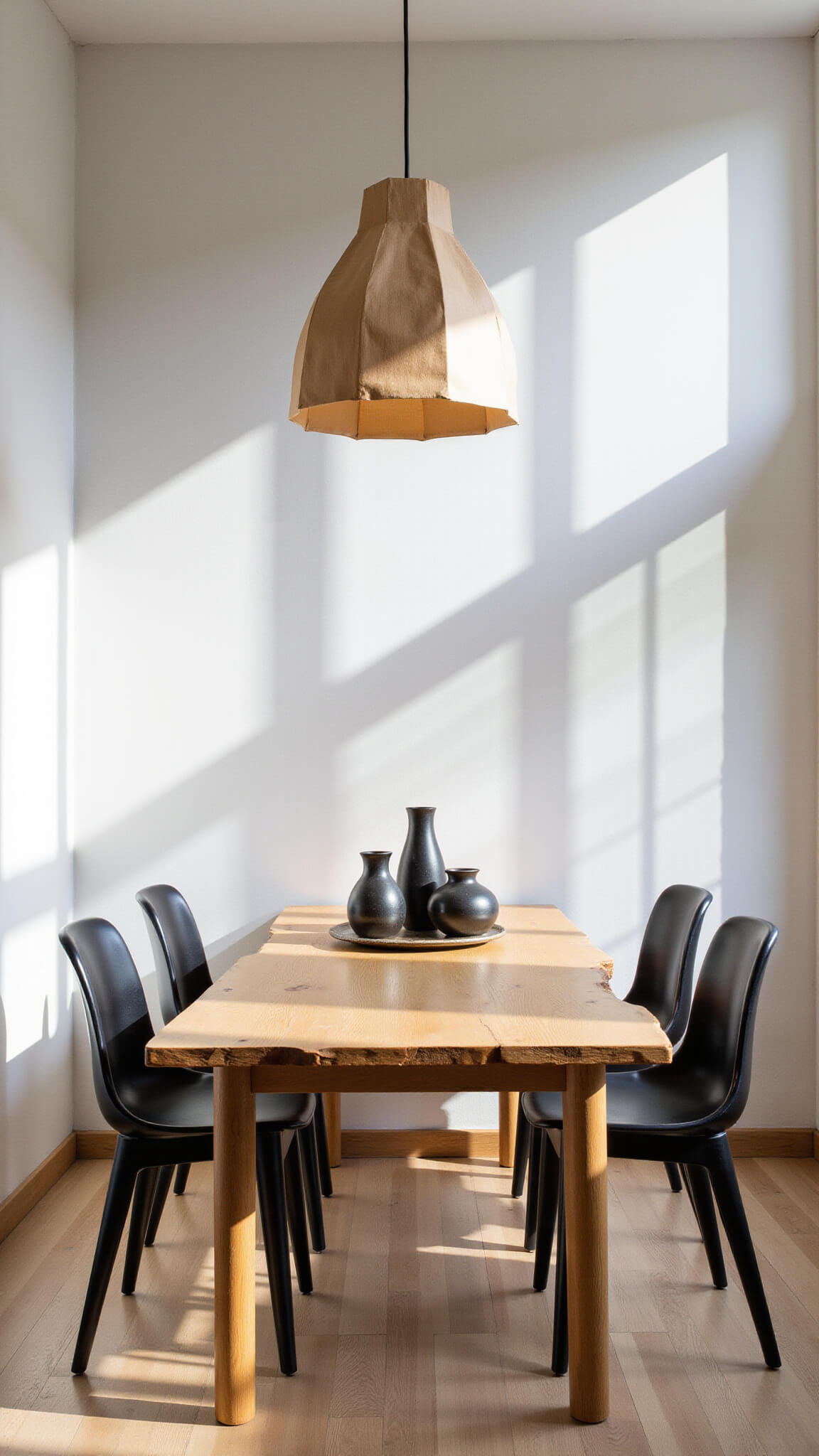
Texture is Your Secret Weapon
Mix textures like a design ninja:
- Rough stone surfaces
- Smooth oak elements
- Linen throws
- Handmade ceramic pieces
🎨 Steal This Look
- Paint Color: Farrow & Ball School House White 291
- Furniture: Low-profile oak frame sofa with natural linen upholstery, hand-turned ash wood stools with visible grain, asymmetrical open shelving in light oak with staggered compartments, Shoji-inspired sliding room divider with rice paper panels and blackened wood frame
- Lighting: Paper globe pendant in warm white, sculptural ceramic table lamp with unglazed finish
- Materials: Raw oak, organic Belgian linen, unglazed stoneware, handmade washi paper, rough-hewn stone, matte blackened steel accents
I always tell clients to sit on the floor before buying—if a piece feels too tall or imposing from that perspective, it’s wrong for Japandi. This look rewards humility in your choices.
Budget Considerations
Let’s talk money. Japandi isn’t about being cheap – it’s about intentional investment.
Budget Ranges:
- Budget-friendly: $2,000
- Mid-range: $5,000
- Luxury: $10,000+
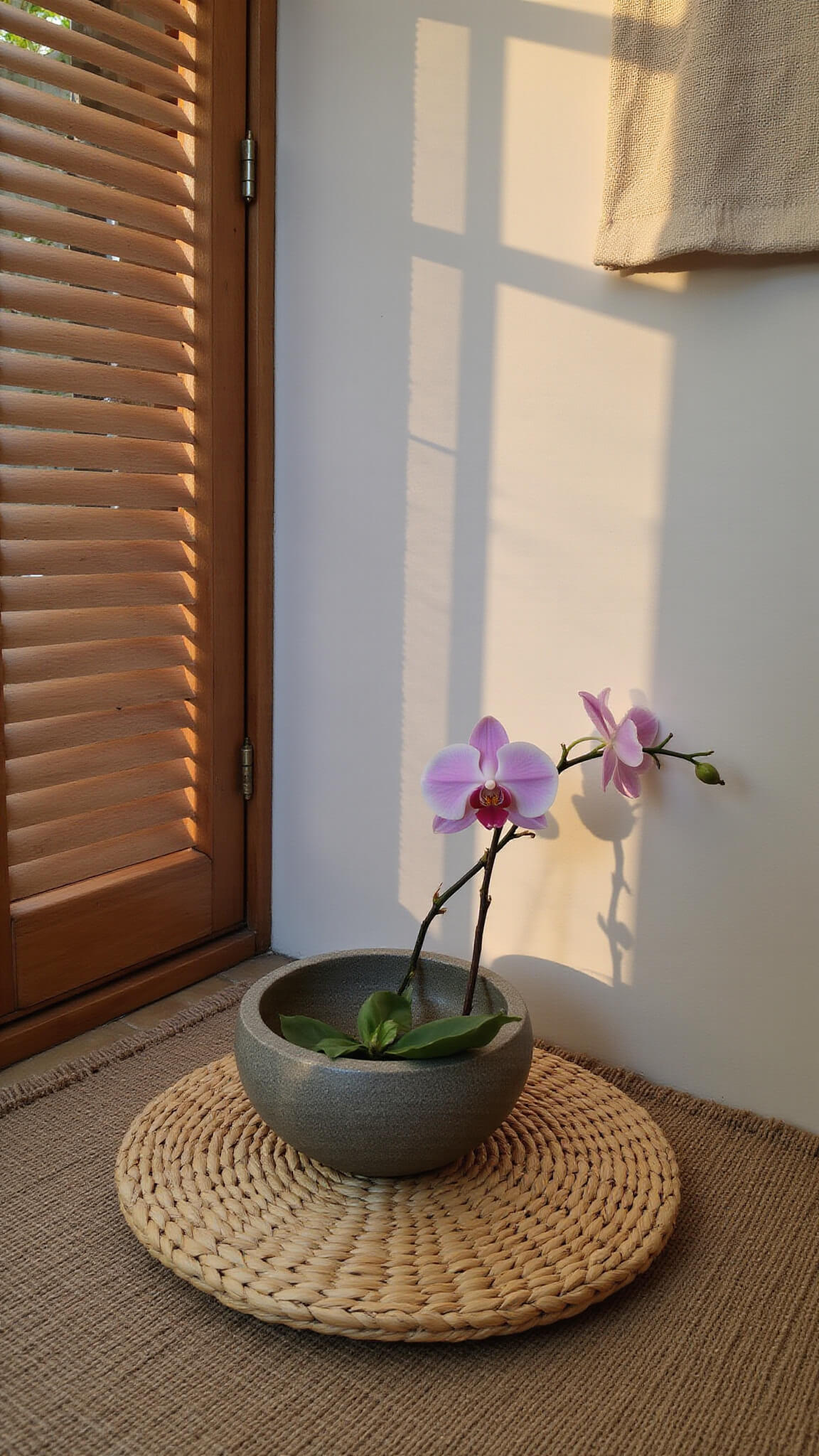
🏠 Steal This Look
- Paint Color: Behr Swiss Coffee 12
- Furniture: Low-profile platform bed with clean joinery, floating nightstands, woven rattan storage bench
- Lighting: Paper globe pendant with warm LED, slim linear wall sconce with rice paper shade
- Materials: Light white oak, raw linen, unglazed ceramic, handwoven jute, matte black metal accents
I always tell clients to start with what they’ll touch daily—the bedding, the drawer pulls, the light switch—because Japandi rewards sensory mindfulness over visual clutter.
Photography and Styling Tips
Want to capture that perfect Japandi moment? Here’s the insider blueprint:
Camera Setup
- Use DSLR or high-end smartphone
- Shoot between 10 AM-2 PM (best natural light)
- Aperture: f/4-f/8
- ISO: 400-800
Styling Techniques
- Follow rule of thirds
- Group objects in odd numbers (3/5/7)
- Maintain 30% negative space
- Use 45-degree side lighting
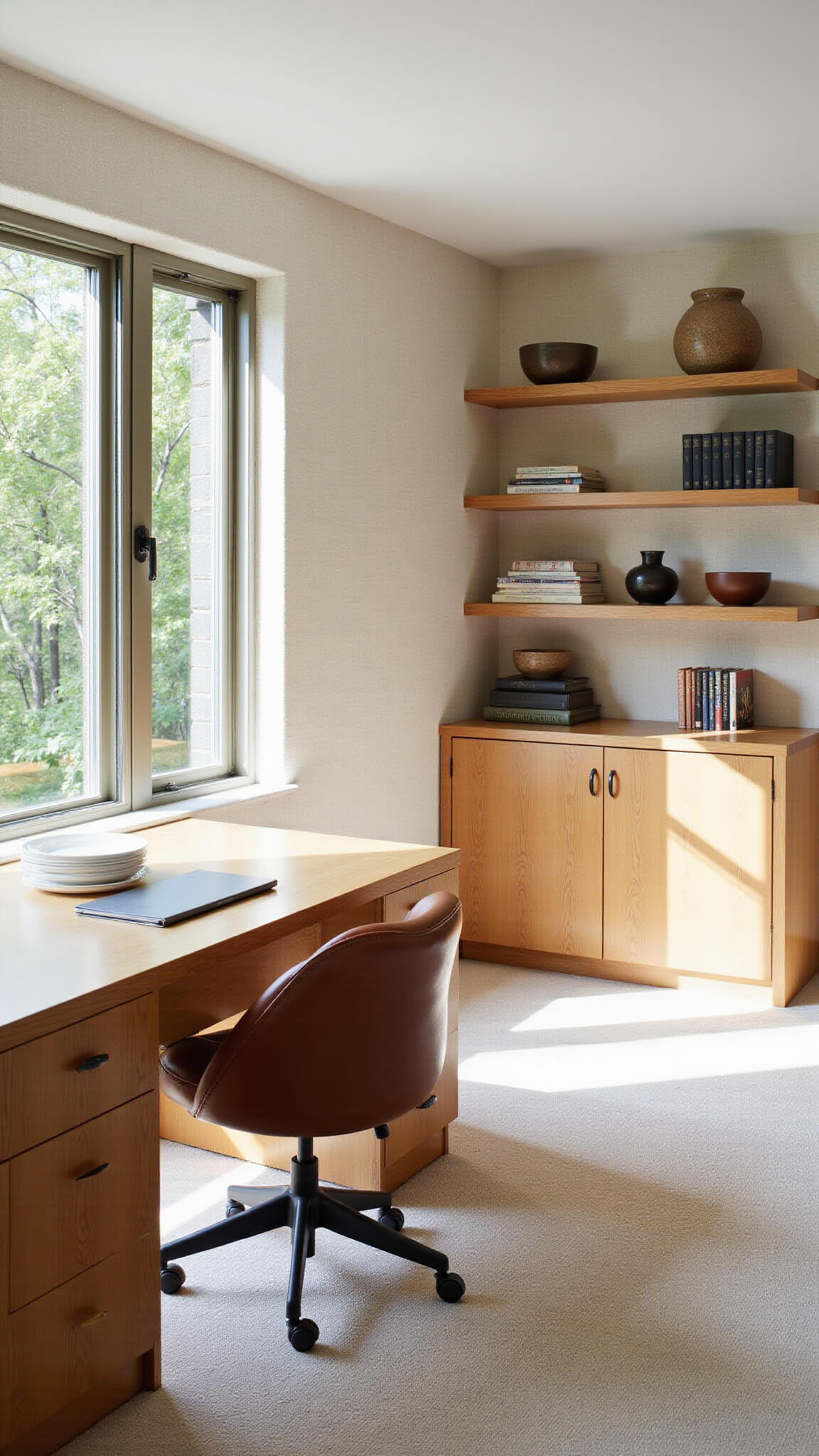
Common Mistakes to Avoid
- Overcrowding your space
- Ignoring natural light
- Choosing flashy, complicated pieces
- Forgetting about functionality
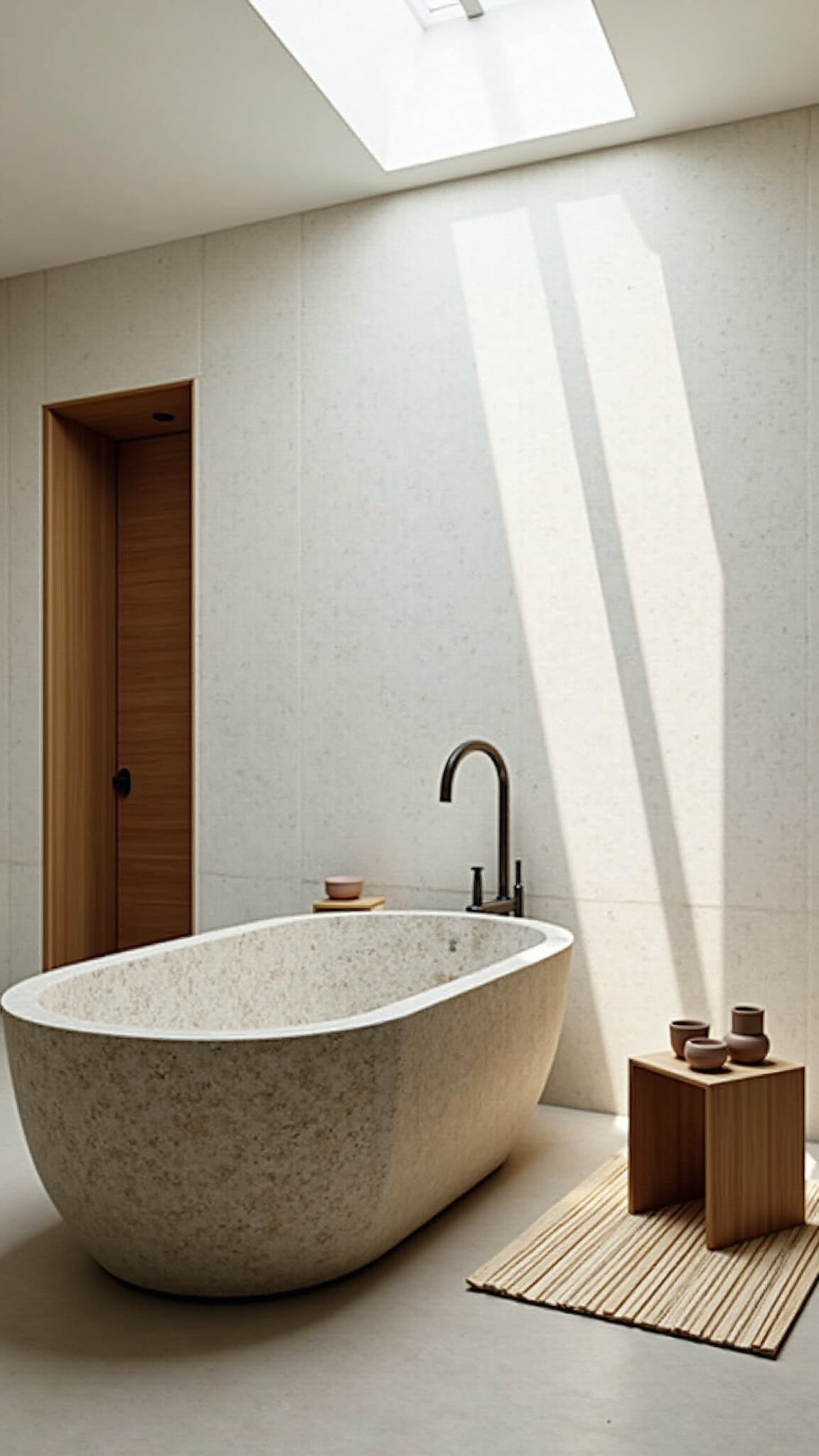
🌟 Steal This Look
- Paint Color: PPG Delicate White PPG1001-1
- Furniture: low-profile platform bed with clean joinery, floating nightstands with hidden storage, single statement floor lamp
- Lighting: paper globe pendant or rice paper floor lamp with warm LED
- Materials: unfinished oak, raw linen, washi paper, unglazed ceramics, light wool
I’ve seen too many beautiful Japandi attempts collapse under the weight of ‘one more thing’—that extra ceramic, that second throw blanket. The discipline of restraint is what makes this style feel expensive, not the pieces themselves.
Seasonal Adaptations
Japandi isn’t static. It breathes with the seasons:
- Spring: Matcha-hued cushions
- Winter: Textured wool throws
- Year-round: Timeless neutral base
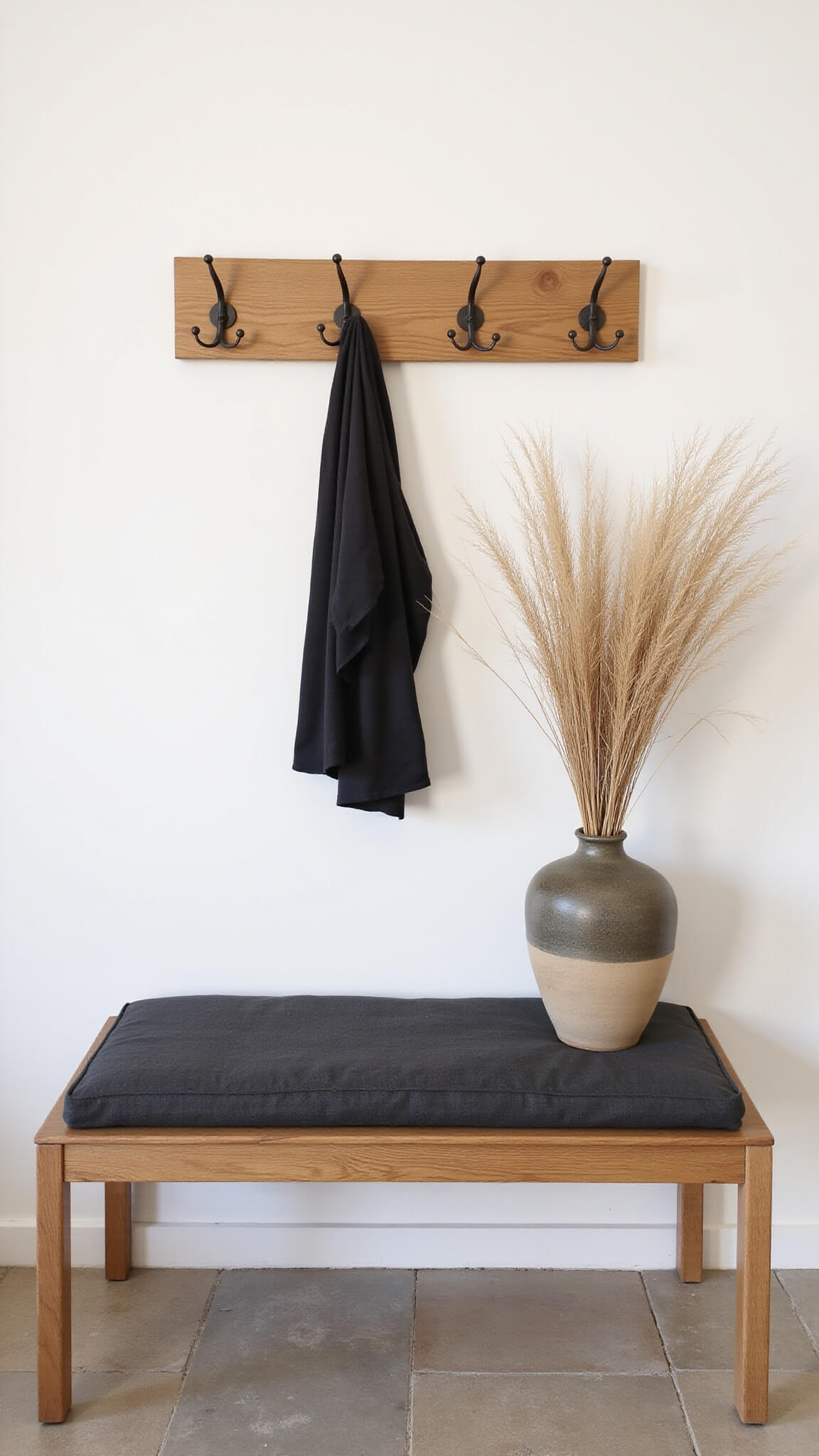
🎨 Steal This Look
- Paint Color: Dunn-Edwards Whisper DEW340
- Furniture: Low-profile platform bed frame in natural oak with woven rattan headboard; modular linen sofa with removable covers for seasonal rotation
- Lighting: Paper globe pendant with dimmable LED; slender brass floor lamp with rice paper shade
- Materials: Raw linen, untreated oak, hand-thrown ceramics, indigo-dyed cotton, washi paper, volcanic stone accents
I rotate my throws with the equinoxes like a quiet ritual—pulling out the heavy wool in late October feels like greeting an old friend, and folding it away in April marks a genuine shift in how the room breathes.
Final Thoughts
Japandi is more than design – it’s a meditation on living intentionally. Every piece tells a story, every texture invites touch, every space breathes calm.
Your home isn’t just a place to live. It’s a sanctuary you craft with purpose and passion.
Keywords: Japandi design, minimalist interior, Scandinavian Japanese fusion, wabi-sabi aesthetic