Mastering Antique Kitchen Decor: A Complete Creative Guide
I styled a client’s kitchen with one enamel sign and a worn wood shelf, and the room finally felt collected. Antique kitchen decor works when the few old pieces actually relate to how you cook, so the space reads as personal instead of staged.
✎ Steal This Look
- Paint Color: Sherwin-Williams Alabaster SW 7008 for cream cabinetry, Sherwin-Williams Urbane Bronze SW 7048 for island accent, Sherwin-Williams Rookwood Dark Red SW 2802 for vintage pantry door
- Furniture: Farmhouse trestle dining table with turned legs, hoosier cabinet with enamel work surface, Windsor-style spindle back bar stools, antique baker’s rack with brass finials
- Lighting: Schoolhouse pendant lights with aged brass hardware, caged Edison bulb sconces, vintage-inspired gooseneck barn light over sink
- Materials: Butcher block countertops, subway tile with dark grout, unlacquered brass hardware, beadboard paneling, cast iron farmhouse sink, reclaimed wood open shelving
I spent three weekends hunting the perfect 1920s enamel-top table for my own kitchen, and that single piece anchors the entire room’s narrative—patience in sourcing is everything when building an authentic antique kitchen.
What Makes Antique Kitchen Decor So Magical?
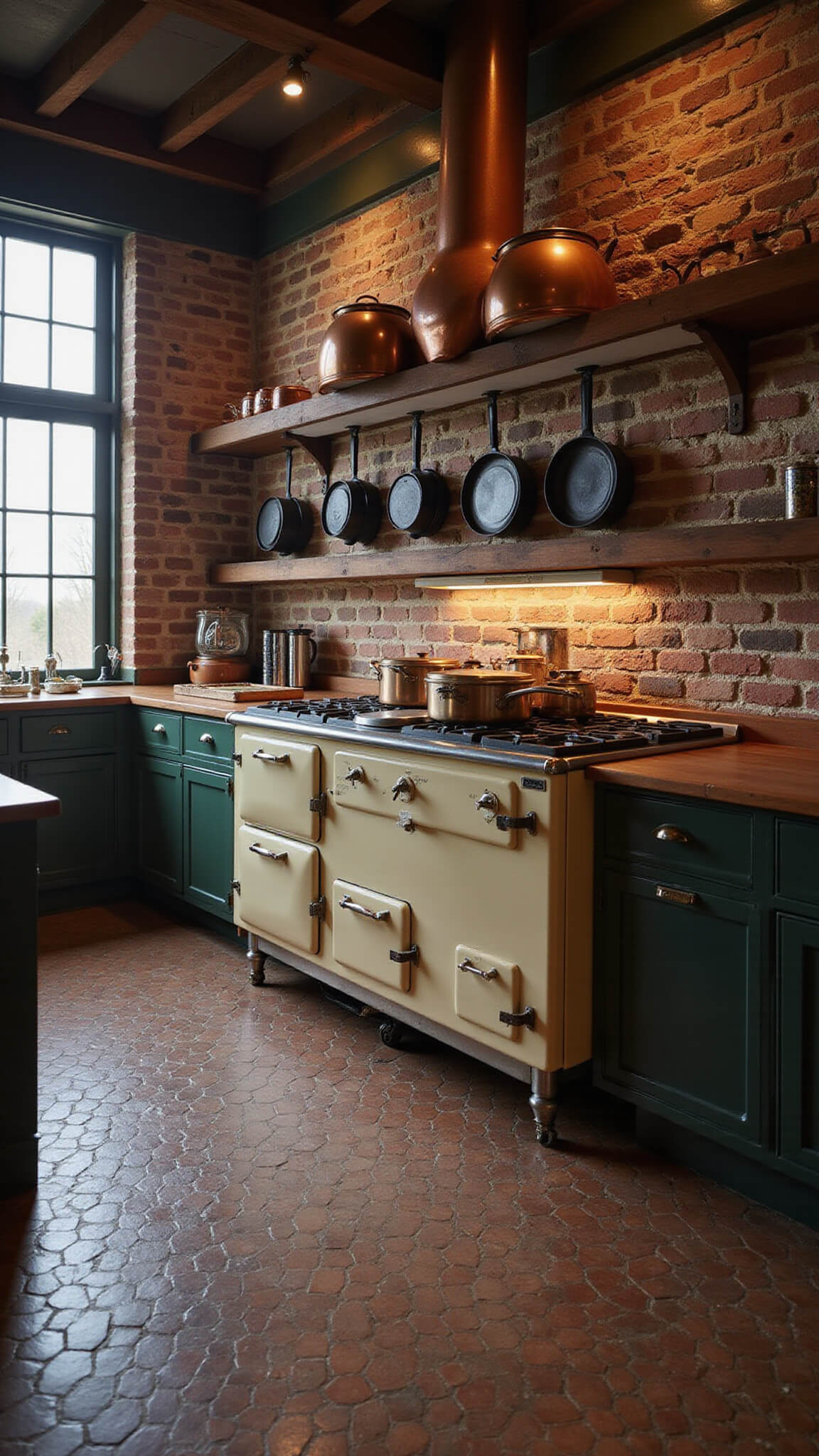
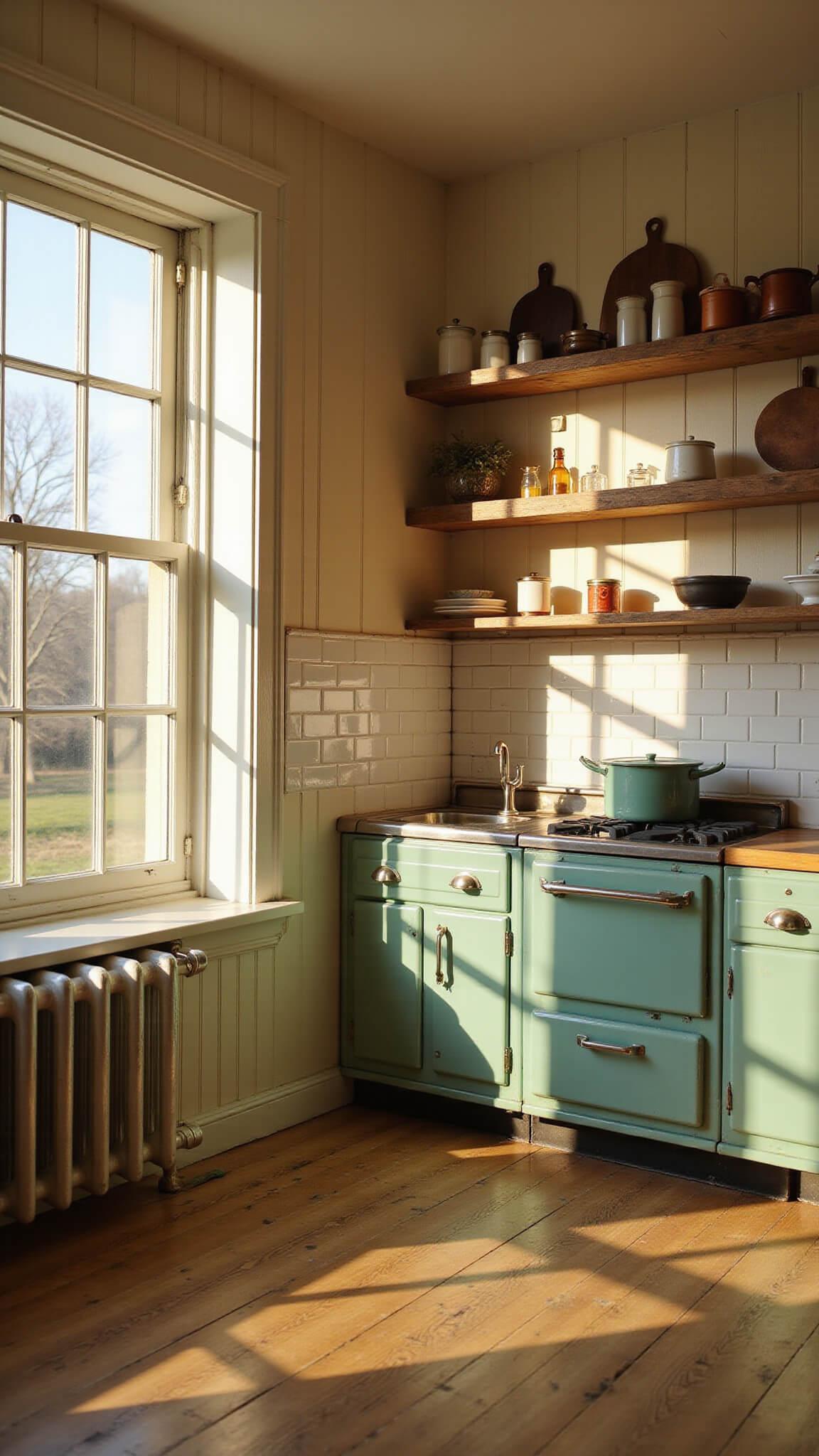
Antique kitchen decor isn’t just a style – it’s a time machine that transforms your cooking space into a nostalgic haven. We’re talking about creating an atmosphere that whispers stories of generations past, where every copper pot and distressed wooden shelf has a history.
The Essential Elements of Vintage Kitchen Magic
Key Components You’ll Need:
- Vintage kitchenware
- Distressed wood accents
- Earthy color palette (greens, yellows, whites, creams)
- Textural mix of glass, wood, and metal
🎨 Steal This Look
- Paint Color: Benjamin Moore Gettysburg Gray HC-107
- Furniture: Farmhouse harvest table with turned legs, Hoosier-style cabinet with enamel work surface, open pine shelving with cast iron brackets
- Lighting: Schoolhouse pendant with milk glass shade, aged brass finish
- Materials: Unlacquered copper that develops patina, reclaimed barn wood with original saw marks, hand-thrown pottery, cast iron cookware, seeded glass cabinet inserts
There’s something deeply comforting about cooking in a space that doesn’t demand perfection—where your grandmother’s dented colander hanging on a hook feels more right than any sleek new gadget ever could.
Budget-Friendly Styling: From $500 to $5000
Let’s be real – not everyone’s got a massive budget for vintage decor. But here’s the good news: you can create a stunning antique kitchen at ANY price point.
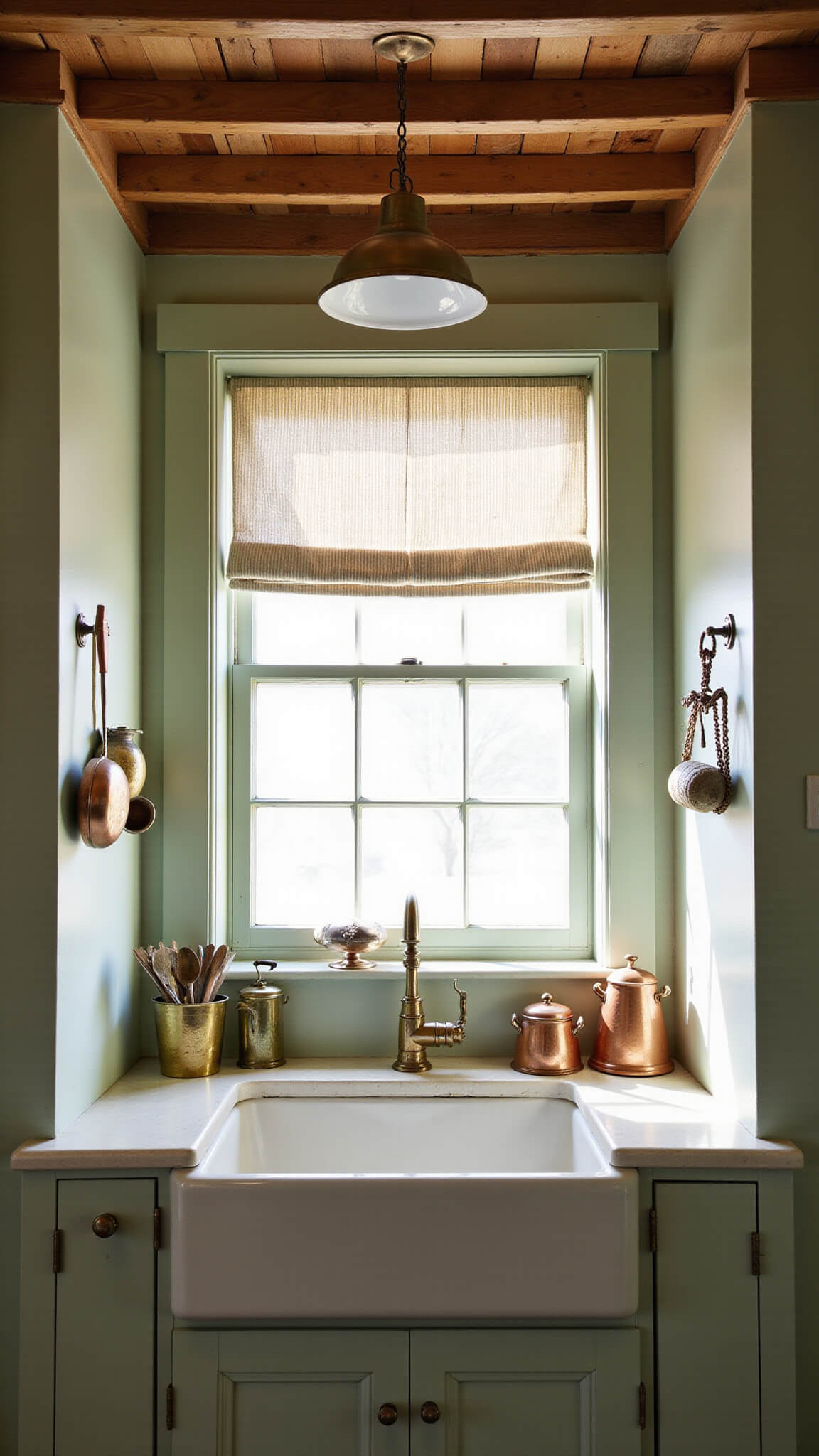
Budget Breakdown:
- Low-End ($500-$1000): Thrift store finds, DIY refinishing
- Mid-Range ($1000-$3000): Select vintage pieces, minor renovations
- High-End ($3000-$5000): Custom pieces, professional styling
🖼 Steal This Look
- Paint Color: Farrow & Ball Drop Cloth 283 — a warm, lived-in neutral that mimics aged plaster and pairs beautifully with salvaged wood and vintage metals
- Furniture: Farmhouse work table with turned legs, open hutch with chicken wire doors, Windsor-style bar stools with worn patina
- Lighting: Schoolhouse pendant with aged brass canopy, or a repurposed industrial factory light with visible Edison filament
- Materials: Unlacquered brass hardware, reclaimed barn wood shelving, zinc or soapstone-look laminate counters, vintage ceramic tile backsplash, cast iron hooks
There’s something deeply satisfying about pulling a $40 oak chair from a estate sale and watching it become the most complimented piece in your kitchen—antique styling isn’t about money, it’s about patience and a good eye.
Styling Secrets: Making Your Kitchen Feel Authentically Vintage
1. Texture is Your Best Friend
Mix and match textures like a pro:
- Rough wooden cutting boards
- Smooth copper cookware
- Aged ceramic dishes
- Linen tea towels
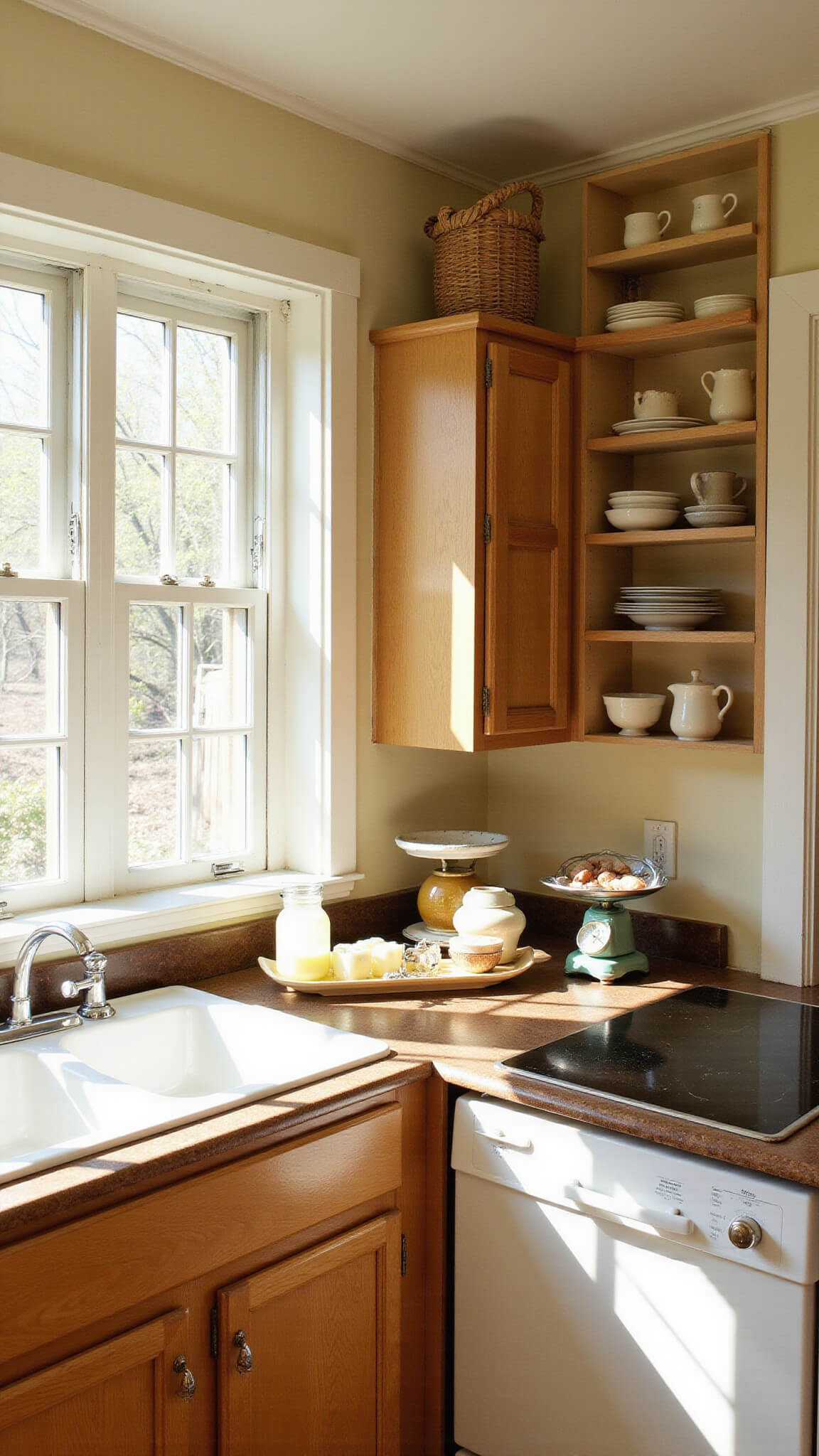
2. Color Coordination Magic
Pro Tip: Stick to a soft, muted color palette. Think:
- Cream backgrounds
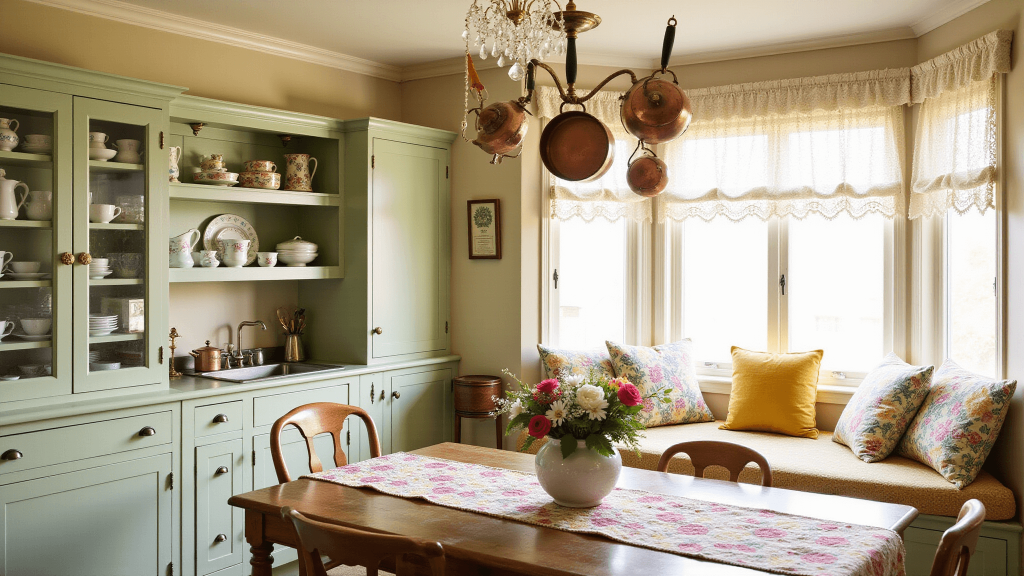
- Sage green accents
- Soft butter yellows
- Warm neutral tones
🎨 Steal This Look
- Paint Color: Behr Swiss Coffee 12
- Furniture: Farmhouse-style open shelving in distressed white oak, vintage-inspired farmhouse sink with apron front, antique brass pot rack with cast iron hooks
- Lighting: Schoolhouse pendant lights with milk glass shades and aged brass hardware, vintage-inspired sconces with frosted glass
- Materials: Aged copper, unlacquered brass, reclaimed barn wood, hand-thrown ceramics, natural linen, cast iron, distressed milk paint finishes
I always tell clients that the most convincing vintage kitchens feel like someone actually cooks there—leave the wooden spoons in a cracked crock, let the copper show its patina, and resist the urge to style every surface to perfection.
Photography and Presentation Tips
Want to showcase your vintage kitchen on social media? Here’s how to make your space look magazine-worthy:
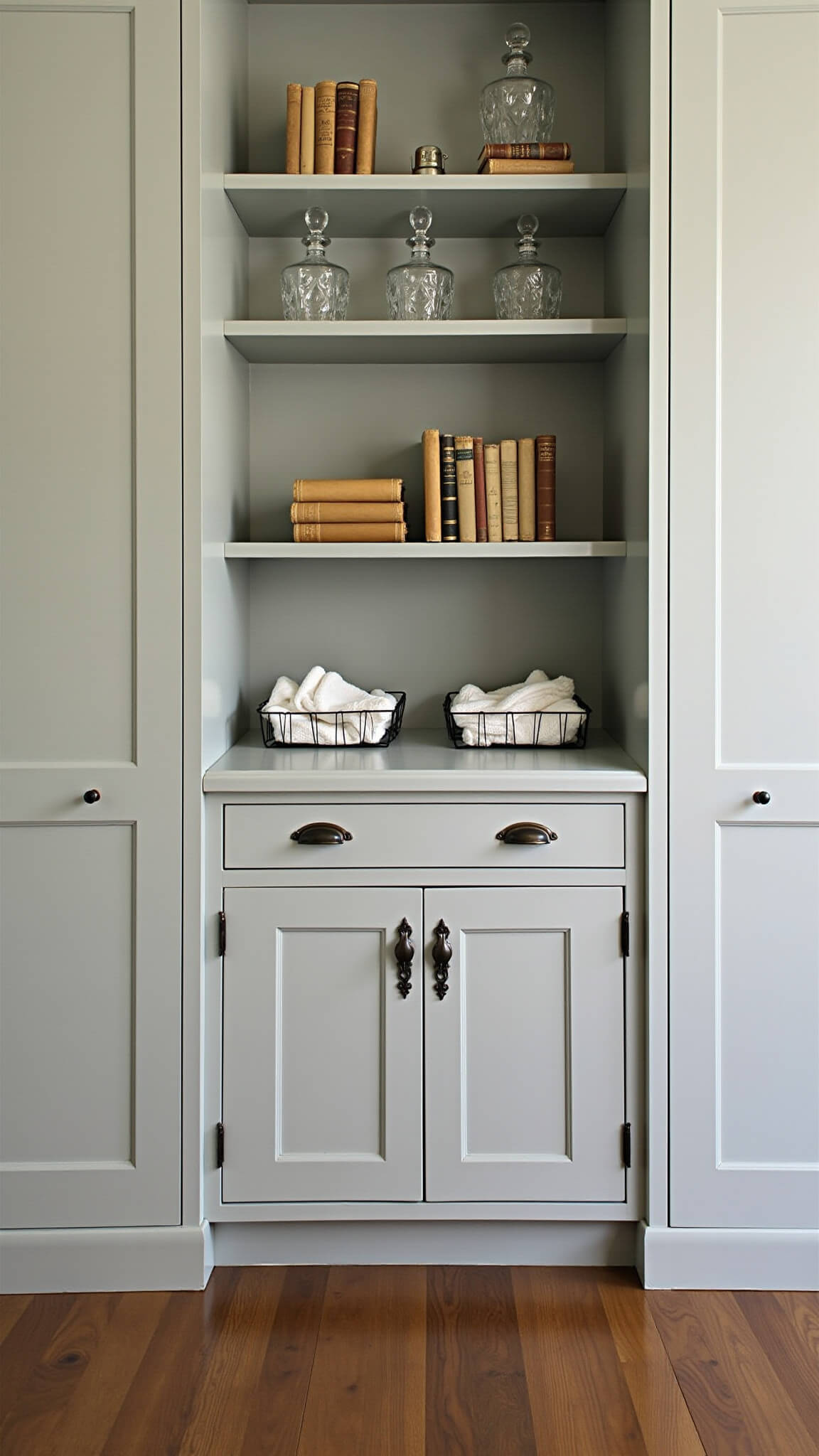
Camera Setup:
- Use natural light (early morning or late afternoon)
- High-resolution camera or smartphone
- Experiment with angles (eye-level, overhead)
Styling Tricks:
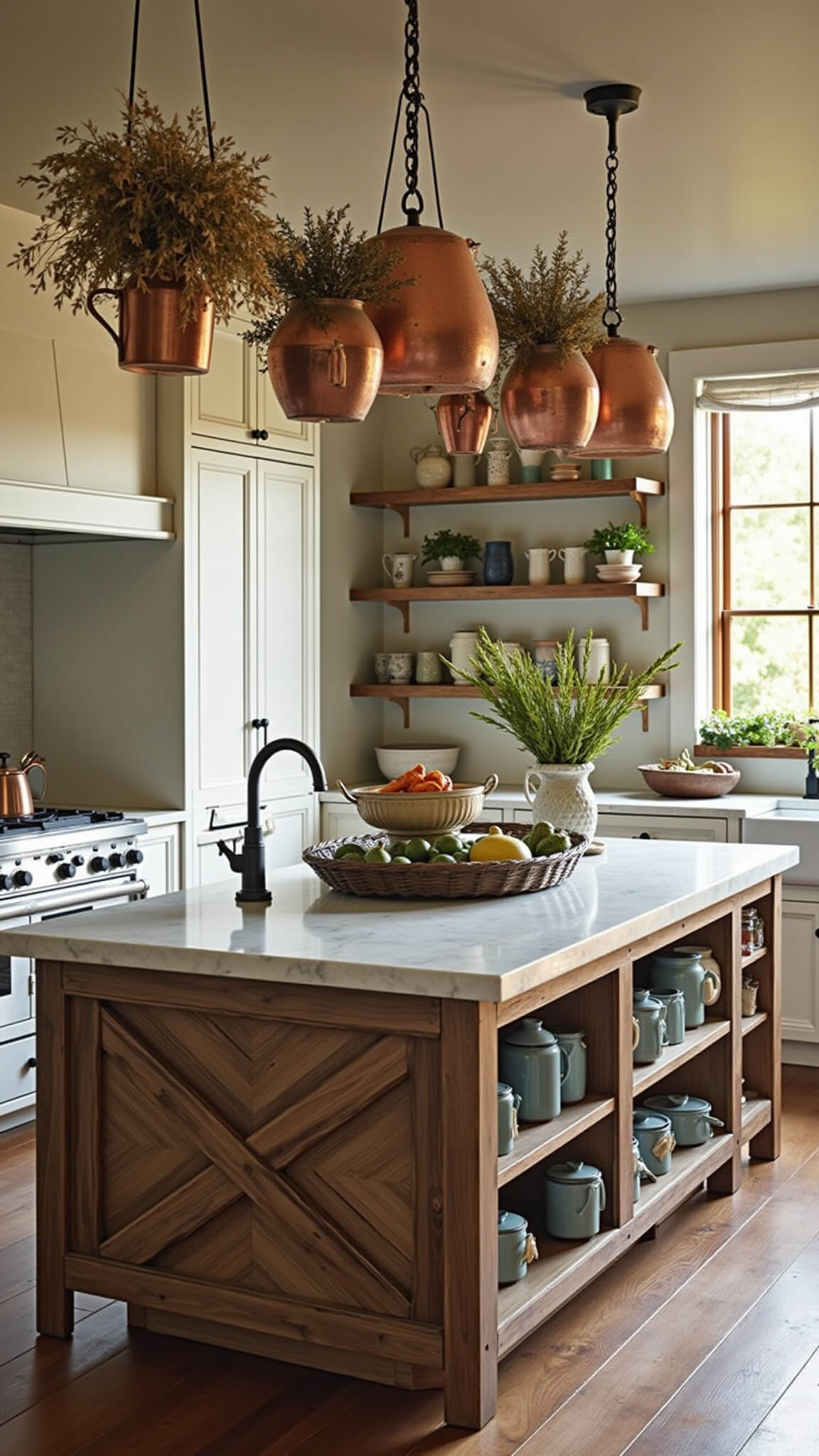
- Always have fresh herbs or flowers
- Use vintage recipe books as props
- Layer different textures and heights
🏠 Steal This Look
- Paint Color: Valspar Vintage Linen 6006-11
- Furniture: weathered farmhouse kitchen table with turned legs, open shelving with iron brackets, antique pie safe cabinet
- Lighting: oversized industrial pendant with aged brass finish, adjustable swing-arm sconce for task lighting
- Materials: distressed wood surfaces, hammered copper cookware, chipped enamelware, linen tea towels, mercury glass
I’ve spent hours styling my own 1920s kitchen for shoots, and the magic happens when you stop trying so hard—let the worn cutting board and the rust-spotted colander tell their story rather than hiding every imperfection.
Common Mistakes to Avoid
Vintage Styling Pitfalls:
- Over-cluttering your space
- Ignoring color balance
- Using reproduction pieces that look fake
- Forgetting to create visual breathing room
🎨 Steal This Look
- Paint Color: PPG Antique White 11-1
- Furniture: Farmhouse trestle dining table with turned legs, Windsor-style spindle chairs, glass-front hutch with crown molding
- Lighting: Oil-rubbed bronze schoolhouse pendant lights with milk glass shades
- Materials: Distressed pine, hammered copper, seeded glass, unlacquered brass, hand-thrown ceramics
There’s a fine line between a collected-over-time kitchen and a cluttered antique mall booth—I’ve learned that the most livable vintage spaces let each piece have its moment rather than competing for attention.
Seasonal Adaptation: Keep It Fresh
Your antique kitchen can evolve with the seasons:
- Spring: Fresh flowers, pastel accents
- Summer: Lighter textures, more greenery
- Fall: Copper tones, wooden elements
- Winter: Cozy layers, warm color palette
✎ Steal This Look
- Paint Color: Dunn-Edwards Swiss Coffee DET648
- Furniture: farmhouse harvest table with turned legs, Windsor-style bar stools, open hutch with glass-front cabinets
- Lighting: schoolhouse pendant lights with aged brass hardware, wall-mounted sconce with frosted glass shade
- Materials: butcher block countertops, unlacquered brass, hand-thrown ceramics, linen tea towels, copper cookware displays, reclaimed wood shelving
There’s something deeply satisfying about reaching for that copper pot in October or swapping in pale blue linens come April—it’s the same kitchen, but it breathes differently with each season, like a well-loved home should.
Technical Optimization (For Social Media Lovers)
Pinterest-Perfect Tips:
- Use vertical images (2:3 ratio)
- High-resolution (1200×1500 pixels)
- Descriptive, keyword-rich captions
- Post in late evening for max engagement
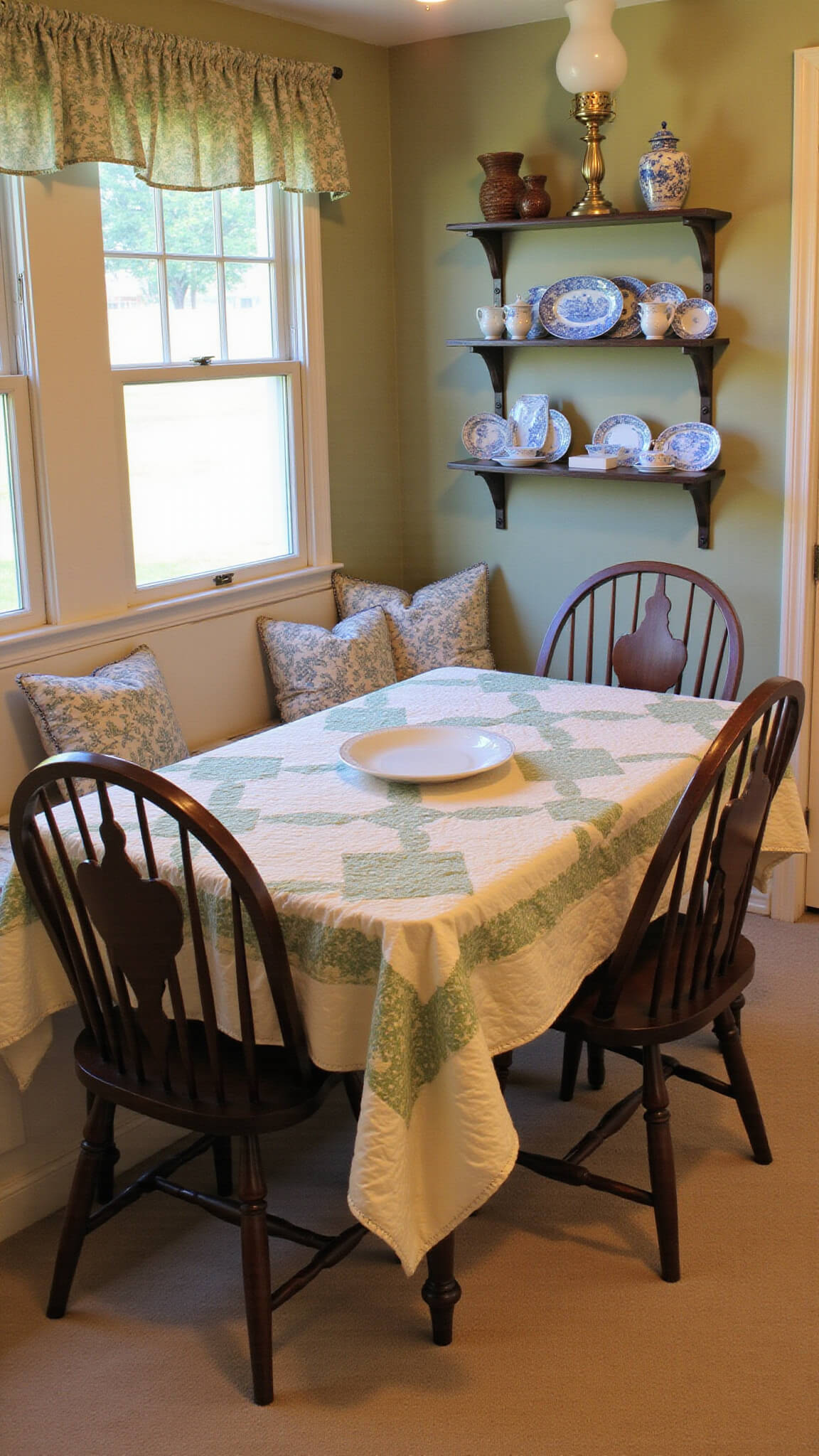
★ Steal This Look
- Paint Color: Clare Paint Classic SW 7071
- Furniture: farmhouse kitchen island with turned legs and distressed wood finish
- Lighting: vintage schoolhouse pendant lights with milk glass shades
- Materials: reclaimed barn wood, hammered copper, cast iron hardware, crackle-glazed ceramics
I’ve watched too many beautiful antique kitchens fall flat on social media because someone shot them at noon with a phone flash—there’s something almost sacred about that late-day light hitting a hundred-year-old butcher block that no filter can replicate.
Final Thoughts: Your Kitchen, Your Story
Antique kitchen decor isn’t about perfection – it’s about creating a space that feels lived-in, loved, and full of character. Every scratched surface, every vintage find tells a story.
Pro Tip: The best vintage kitchens look like they’ve been lovingly curated over decades, not purchased in a single shopping spree.
Ready to transform your kitchen into a timeless masterpiece? Start small, be patient, and let your personality shine through every vintage detail.
Let one piece lead and keep the rest plain. Antique kitchen decor feels right when the objects you choose actually belong to the room’s daily use.