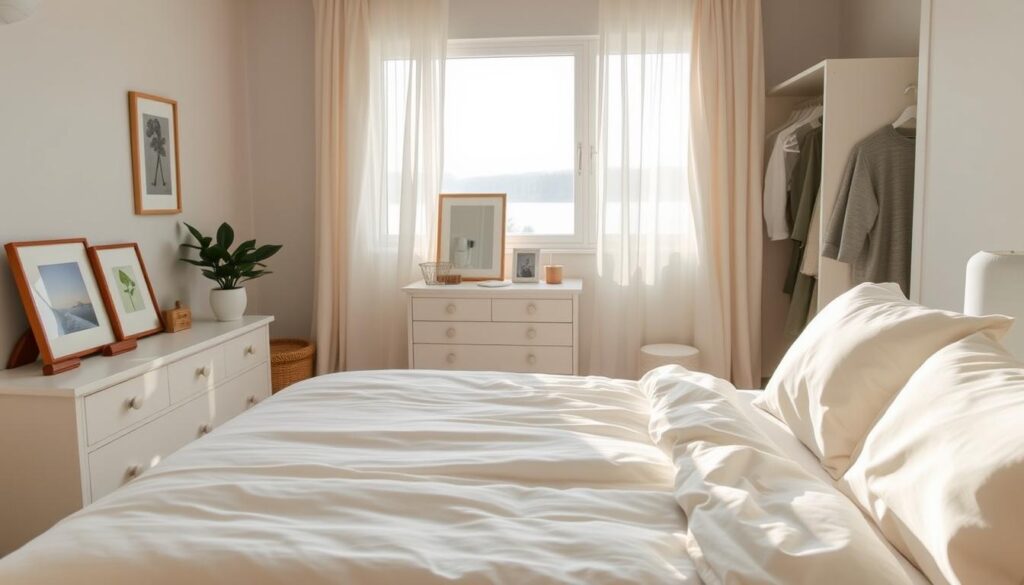
I still remember opening my closet one morning and feeling my chest tighten. Clothes spilled onto the floor, forgotten gadgets crowded my nightstand, and mismatched shoes created an obstacle course. My sanctuary had become a source of stress, not peace. That’s when I realized: the state of our personal spaces shapes our mental well-being far more than we admit.
Research shows clutter disrupts sleep cycles and decision-making. Your brain processes visual chaos like unfinished tasks, delaying REM sleep by up to 45 minutes. I learned this the hard way during my own transformation journey. What started as a weekend project became a life-changing practice in intentional living.
This guide isn’t about ruthless minimalism. It’s about creating room for what truly matters. You’ll discover why starting with your sleep environment creates ripple effects across your home and daily routines. We’ll explore how physical order quiets mental noise, using strategies that work for real people with busy lives.
Together, we’ll reclaim your space—and your peace. Let’s begin where renewal happens best: the heart of your home.
Introduction: Why My Bedroom Decluttering Journey Matters
That first drawer I opened changed everything. Stuffed with expired coupons, tangled jewelry, and mismatched socks, it mirrored my chaotic daily life. Starting with personal spaces creates immediate wins. My bedroom became the testing ground for lasting change.
Working through my own mess first removed family negotiation stress. I controlled every decision without guilt. This private practice zone built skills I later used in shared areas.
| Aspect | Before | After |
|---|---|---|
| Morning Routine | 15 min searching for items | 5 min smooth prep |
| Weekly Stress Peaks | 4-5 days | 1-2 days |
| Decision Fatigue | Constant | Rare |
The real breakthrough came three weeks in. I noticed faster sleep onset and fewer midnight wake-ups. My cleared surfaces became mental rest stops rather than anxiety triggers.
This personal sanctuary now fuels my whole-home progress. Completed spaces act as visual reminders of what’s possible. Start where you sleep – it’s the ultimate proof-of-concept for lasting change.
The Benefits of a Clutter-Free Bedroom Sanctuary
The first night in my newly organized room was an eye-opener. Without piles of clothes or scattered papers, my mind settled faster than ever. Dr. Joseph Ferrari’s research rings true here: chaos from excess belongings directly impacts our cognitive load.
Neuropsychologist Diane Roberts explains how visual noise limits focus. I experienced this firsthand—fewer distractions meant quicker sleep onset and deeper rest. My refreshed mornings became routine, not luck.
| Factor | Cluttered Space | Organized Sanctuary |
|---|---|---|
| Sleep Onset Time | 30+ minutes | Under 15 minutes |
| Daily Focus Levels | Frequent interruptions | Sustained concentration |
| Decision Speed | Hesitant choices | Confident actions |
Clearing physical items creates mental breathing room. Friends noticed my calmer demeanor within weeks. Arguments over misplaced items vanished, replaced by meaningful conversations.
Productivity soared in unexpected ways. With a designated relaxation zone, I tackled tasks efficiently knowing true rest awaited. The space became my reset button—a haven for recharging body and mind.
Long-term benefits emerged gradually. Reduced anxiety, sharper problem-solving, and renewed appreciation for intentional living transformed more than just my sleeping area. Your sanctuary awaits—it’s closer than you think.
Getting Started: Gathering Supplies and Setting Intentions
The rustle of a half-empty donation bag stopped me cold. Preparation separates wishful thinking from real progress. Before touching a single item, arm yourself with purpose and practical tools.
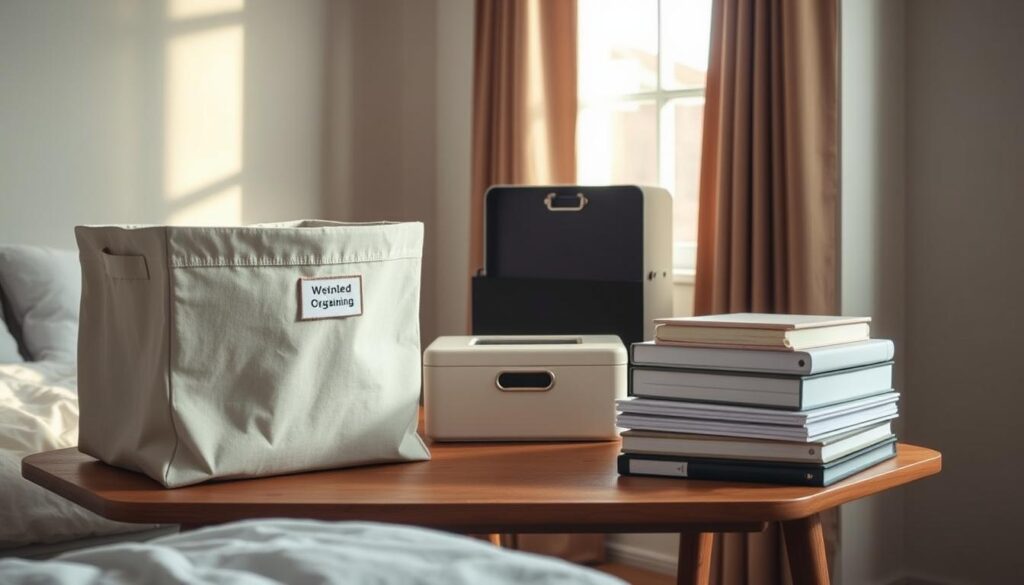
Collecting Your Decluttering Tools
My battle-tested kit includes two heroes: a giant IKEA shopping bag (“The Blue Bag”) for donations and heavy-duty trash bags. Label four containers: Keep, Donate, Relocate, Trash. Add sticky notes and a timer for focused sessions.
| Essential Tools | Optional Helpers | Mindset Boosters |
|---|---|---|
| Sorting containers | Label maker | Before photos |
| Sturdy bags | Drawer dividers | Vision board |
| Cleaning supplies | Storage bins | Calming playlist |
Establishing a Decluttering Mindset
Marie Kondo’s visualization technique works wonders. Close your eyes. Breathe in the imagined calm of your renewed space. Write three adjectives describing this feeling—”serene,” “inviting,” and “mine” topped my list.
Block a specific day on your calendar. Morning person? Start after coffee. Night owl? Begin post-dinner. Protect this time like a doctor’s appointment. Progress builds momentum—even 90 minutes creates visible change.
When doubt creeps in (“What if I need this someday?”), recall your vision words. That crumpled concert tee from 2009 either sparks joy or becomes someone else’s treasure. Your future self will thank you for decisive action.
how to declutter your bedroom: My Personal Approach
My closet door creaked open, revealing a truth I’d ignored for years. My strategy begins with personal territory—your side of the closet. This zone holds only your belongings, eliminating debates about others’ possessions. Start here to build confidence before tackling shared spaces.
I follow a modified KonMari technique. Begin with clothing—the easiest category. Handle each piece individually. Ask two questions: “When did I last wear this?” and “Does it spark genuine joy?” Immediate decisions prevent second-guessing. No maybe piles allowed.
| Category | Key Question | Action Trigger |
|---|---|---|
| Clothing | Last worn date | Donate if >1 year |
| Accessories | Joy factor | Keep only favorites |
| Storage Items | Practical use | Relocate if unused |
Work in 90-minute bursts. Set a timer to maintain focus. When fatigue hits, step outside for fresh air. Return with renewed clarity. Celebrate small victories—a cleared shelf or sorted drawer.
Save sentimental objects for last. These require emotional energy. By then, your decision muscles will be strong. Stick to your designated zones—this process isn’t about fixing others’ habits. Your progress becomes contagious inspiration.
Through this method, I reclaimed 40% of my closet space in three sessions. Surfaces stayed clear because everything earned its place. Remember: perfection isn’t the goal. Consistent effort creates lasting change.
Organizing Your Closet and Wardrobe
The moment I emptied my entire wardrobe onto the bed, patterns emerged. Torn jeans buried for years, duplicate blouses bought on sale, shoes that never fit right. This visual inventory became my roadmap for intentional storage solutions.
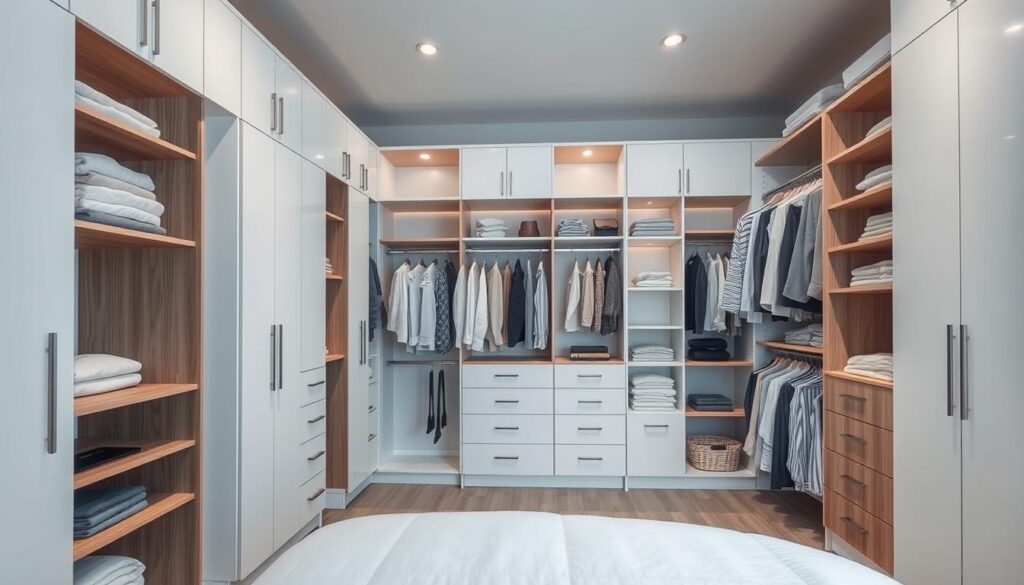
Designing a Capsule Wardrobe
Start by identifying core pieces matching your current lifestyle. My 33-item capsule includes work staples, weekend wear, and special occasion outfits. Neutral tones form the base, with pops of color through scarves and jewelry.
| Capsule Essentials | Regular Wardrobe | Space Saved |
|---|---|---|
| 5 versatile bottoms | 12+ random pants | 58% |
| 8 mix-and-match tops | 20+ single-use shirts | 63% |
| 3 multi-season jackets | 7 seasonal coats | 71% |
Setting Up a Closet Organization System
Arrange hanging items by length and frequency of use. Dresses and coats occupy the left side, followed by shirts and blouses. Folded sweaters live in labeled bins above, while shoes stand vertically in clear boxes below.
Try velvet hangers for slippery fabrics and tiered racks for belts. Seasonal accessories migrate to under-bed storage during off-months. This system cut my morning prep time in half—no more digging through piles.
Clearing Floors and Surface Clutter
Staring at the maze of objects around my feet, I realized my floors had become storage. Items blend into the landscape until we stop seeing them. Let’s reset your visual field by tackling these often-overlooked zones.
Removing Items From Flats and Surfaces
Start with a clean slate. Empty every surface completely—nightstands, dressers, windowsills. I found expired lotions and orphaned earrings hiding in plain sight. Sort items into three categories: daily essentials, occasional use, and never touched.
| Item | Common Floor Spot | Proper Home |
|---|---|---|
| Books | Bedside pile | Wall-mounted shelf |
| Electronics | Under bed | Charging station drawer |
| Seasonal accessories | Closet corner | Under-bed bins |
For floors, use the “three-second rule.” If something hasn’t moved in 72 hours, it needs a real home. Check behind furniture and under the bed—dust bunnies shouldn’t have roommates.
Designating a Home for Misplaced Items
Create landing pads for frequent wanderers. A shallow basket by the door corrals shoes. A lidded jar on the dresser holds daily jewelry. My nightstand now has just three things: lamp, water glass, and a single meaningful trinket.
Maintenance is simpler than you think. Spend two minutes nightly returning stray items. Clear surfaces become mental whiteboards—space for ideas instead of clutter.
Creating an Effective Storage System
Running my fingers along the smooth drawer lining, I rediscovered space I’d forgotten existed. Strategic organization transforms forgotten corners into functional zones. Let’s reimagine your most overlooked storage areas.
Revamping Dresser Drawers and Nightstands
Empty one drawer completely. Hold each item—worn socks, faded undergarments, single earrings. If it hasn’t been used or loved in a year, release it. I keep only seven daily essentials in my nightstand now. Drawer dividers create designated zones for folded tees and workout gear.
Purposeful Storage Solutions for Under-Bed Areas
My bed frame now cradles two labeled fabric bins. Seasonal sweaters rotate here during summer months. Measure your clearance height—standard 15-inch risers allow 12-inch containers. Avoid “mystery boxes.” Every stored item must serve a documented purpose.
This system became my secret weapon. Drawers stay tidy because everything has clear boundaries. Under-bed bins get emptied quarterly. Your storage spaces should work for you, not against you. Start small—one drawer today leads to lasting order tomorrow.